Winter
Slow down, rest, and connect with your body
Welcome to the Winter Embodiment Path
Winter invites us into rest, stillness, and deep listening. This season is not about doing more, it’s about slowing down enough to feel, to soften, and to let the body lead.
In the Autumn Path, you returned to your roots, reconnected with yourself, and reestablished a grounded sense of inner safety. This foundation is essential. True rest can only unfold when the body feels safe enough to pause.
Winter builds upon this work, inviting you to settle into stillness and allow restoration to happen naturally. Through embodied listening, gentle movement, and nourishing support, this path offers space for your nervous system to exhale and for quiet renewal to take place beneath the surface.
In the video below, you’ll be guided through the essence of the Winter Embodiment Path and how to work with these practices throughout the season. Let this be a gentle beginning.
Let’s begin.
Embodied Listening Practice
The Winter Embodied Listening practice gently invites you to check in with your thoughts, feelings, emotions, sensations, and breath. By connecting with your present-moment experience, you begin to learn the language of your body.
You’re encouraged to bring your awareness to whatever arises with curiosity and compassion. There is no right or wrong experience here, and nothing to analyze or judge. The intention is simply to witness and be with what is present.
Winter mirrors the sacred pause between the exhale and the next inhale. We explore this pause through a gentle breath-retention practice. If you are pregnant, please skip this portion and continue following the natural rhythm of your breath.
Return to this practice each day, allowing yourself to move slowly and notice what unfolds.
Embodied Movement Practice
The Winter Embodied Movement is a restorative practice, supporting your body to ease into rest.
This is a beautiful practice to do before you slip into bed at night.
Embodied Nourishment
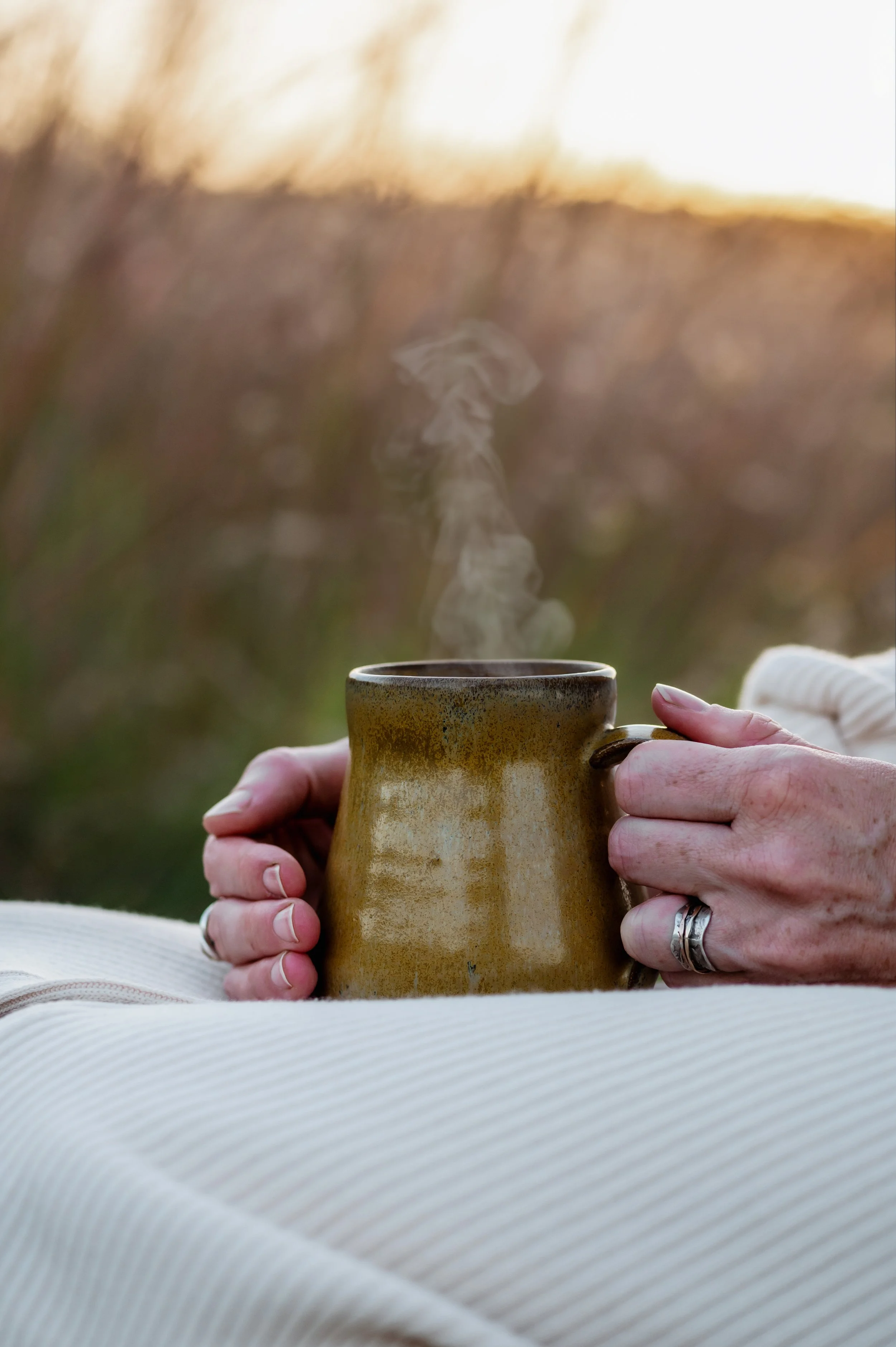
Nourishment takes many forms: food, herbs, love, connection, and the felt experience of emotions like joy, pleasure, compassion, and self-acceptance. In this section, we’ll explore nourishment in its many expressions as a way to deepen connection with your body and inner landscape.
When you slow down and engage your senses as you prepare a recipe or move through a practice, you begin to notice what truly supports you. Over time, this awareness helps you understand what you need in each phase of your cycle; how to listen, respond, and care for yourself with greater attunement.
Herbalism offers one pathway into this relationship. It invites us to partner with our bodies, our health, and the natural world in ways that feel both meaningful and reciprocal. Many of the herbs and foods we already know and love carry powerful medicine. Whole, seasonal foods, especially those grown close to home, nourish not only the body, but also the mind and spirit.

Inner Winter Herbal Tea
4 parts Holy Basil or Tulsi (2 tsp)
2 parts Rosehips (1 tsp)
1 part each Licorice Root, Skullcap, and Red Raspberry Leaf (1/2 tsp each)
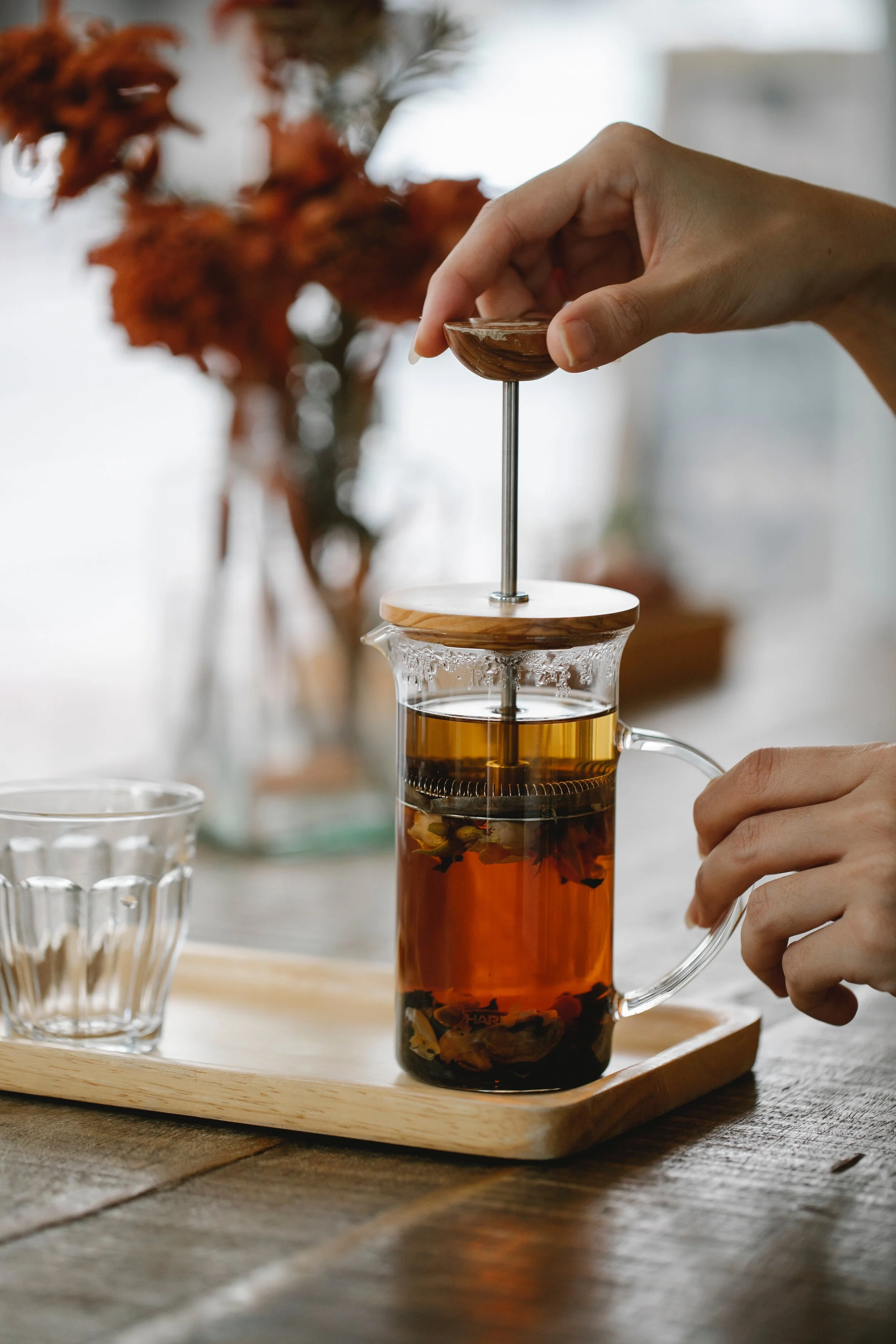
Mix dried herbs together in a tea bag or 12 ounce French press. Pour hot water over, cover and steep for 10-15 minutes. Strain herbs and enjoy!
You can mix larger quantities in a jar and use about 1 Tbsp of dried herbs for 8 ounces of water.
-
Tulsi is a variety of basil that is sacred in Indian culture. She is a more feminine presentation of basil and considered a wisdom-holder. Tulsi is also a powerful adaptogen, which means she helps our body respond to stress more intelligently. She balances and reduces the negative effects of stress on both physical and emotional health, especially when taken regularly. She also helps to balance blood sugar.
-
Rosehips are the fruit of the rose flower and harvested in autumn. They provide Vitamin C, which is supportive to your immune system as cold and flu season begins. They also offer sweet, gentle, emotional support.
-
Licorice is sweet, harmonizing, and moistening. The sweet taste (other than sugary treats) is fortifying and rejuvenating for your body. Autumn can bring dryness and moistening herbs are particularly beneficial. Licorice is helpful if you are feeling depleted and is a wonderful ally for inflammation and repair in your body.
Note: Avoid licorice if pregnant.
-
Skullcap is a powerful nervine, meaning it is calming to your nervous system. Skullcap in particular is helpful for busy minds and mental chatter. She reduces tension and inflammation in your nerves. She is nourishing and mineral-dense.
-
Red Raspberry Leaf is a beautiful ally for women’s reproductive health. She is nutritive and tonifying for the uterus, supportive both in pregnancy and menstruation. She balances hormones, brings irregular cycles back into balance, and eases menstrual cramps. Raspberry holds and nourishes us during transformations.
Note: Each herb has many powerful actions in our bodies. This is not intended to be a comprehensive overview of each herb, rather an introduction to the herb, why they were chosen for this tea blend, and how they can support us this season.
Herbal Tea Sensory Embodiment
Connecting with herbs through our senses is a wonderful way to build a relationship with herbal allies. Each herb has their own energetics (wet/dry, hot/cold) and taste (sweet, sour, salty, pungent, bitter, and astringent). You can learn about herbal energetics from a book, but it is only through your own embodied exploration do you understand the unique way each herb interacts in your body.
I invite you to go back to the Herbal Embodiment Practice on the homepage and work with each herb individually or as a blend. Begin to notice your own taste, smell, mouthfeel, and inner sensations as you drink the herbal infusion. Notice how might this change over time as you deepen your relationship with the herb and your body.
Nourishing Herbal Bone Broth
Marrow bones
Fresh veggies (carrots, onions, celery, leeks, etc.)
Fresh herbs (garlic, ginger, parsley, basil, etc.)
Dried shiitake mushrooms
Dried herbs (nettle, fennel, astragalus, rosemary, thyme, burdock, sage, etc.)
Seaweed (kombu, wakame, or dulse)
Dried jujube dates and/or goji berries
Salt and pepper to taste
Splash of apple cider vinegar
Add all ingredients to a big stock pot. You can roast the marrow bones in the oven at 425F for about 30 minutes before adding them to the pot. This will add depth to the flavor.
Add enough water to cover all the ingredients and have several inches extra on top.
Bring to a boil. Lower to a simmer, cover.
Simmer for 2-4 hours.
Let cool before straining.
Use within a week or freeze for later.
-
Carrots are root crops that store well. The orange color is from beta-carotene. Our bodies turn beta-carotene into Vitamin A, which is important for keeping your skin and bones healthy, resisting and fighting infection, and good eyesight.
-
Beets get their bright red color from pigments called betalains, which are know for their cancer-fighting properties. Beets are also high in Vitamin C, which is important for our immune system and is an antioxidant, protecting our cells from damage.
-
As a kitchen herb, rosemary supports digestion and assimilation of fats and oils. She eases gas, bloating, and intestinal cramping. Rosemary helps soothe cramping associated with menstruation and calms an upset or nervous stomach. She delays the uptake of carbohydrates in the system, which leads to slower increases in blood sugar levels.
-
As a kitchen herb, thyme is warming and calming to our digestive system. She eases gas, bloating, and indigestion. She also eases tension and cramping associated with menstruation.
Winter invites us to prepare foods that will bring warmth to our bodies. Warm, cooked foods are also easier for your body to digest. Soups and stews are a perfect seasonal meal and are easy to adapt to whatever you have in your pantry.
I don’t use a recipe for my bone broth. As long as you have bones, fresh veggies, and some herbs, it will taste wonderful. Use your intuition and have fun adding new ingredients.
Sensory Embodiment Practice
Preparing and eating food with intention invites us to slow down and connect with our senses. This practice brings us into deeper connection with our bodies and the simple, embodied experience of nourishment.
Make space to sit down for your meal. Before you begin eating, take a few slow, grounding breaths to settle into your body. Notice your food: the colors, the textures, the way it looks in the bowl. Inhale and take in its scent. What do you notice?
As you take your first bite, move slowly. Feel the texture in your mouth, notice the flavors as they unfold. Sense how your body responds to each bite. What sensations or emotions arise as you eat this simple, seasonal meal?
Allow yourself to truly savor your food and feel the ways it’s nourishing you. Over time, this practice deepens your relationship with both your body and the food that sustains it.

When we are in spaces that feel safe, cozy, and supportive, your body is able to slow down and rest. Evenings in the winter are dark and I invite you to lean into this. Having a fire and/or lighting candles brings warmth to your space. Natural beeswax candles are clean, natural option and they have a subtle, sweet scent. Turning off screens at least 30 minutes (or more) before sleep and using red lights supports our circadian rhythm and prepares the body for a restful sleep.
Pay attention to what you are wearing during the winter. Natural fibers like wool and linen regulate body temperature, keeping you warm without being sweaty. Some studies also suggest wool and linen have high vibrational frequencies that impact your energetic field. Try wearing only natural fibers for a month and notice if this changes how you feel.
Restful Surroundings
Reflection Questions
Think about the past 3 months. Reflect on your challenges, inspirations, and blessings. Can you offer gratitude for your experiences? Think about the next 3 months. How do you want to feel? What are you calling in?
Where are you resisting the invitation to rest? What would happen if you leaned in to winter’s offering to slow down? Can you surrender to your cycles and trust that new life and possibilities will be reborn in good time?
What is your relationship to rest? Do you think rest is unproductive, lazy, something to be earned, a luxury, etc.? Is this true? What else could be true?